


Available Options
| Thumbnail | QUANTITY | Price | Quantity | |
|---|---|---|---|---|
 | 120 TABS | £304.00 | ||
| 180 TABS | £428.00 | ||
| 240 TABS | £558.00 | ||
| 300 TABS | £671.00 | ||
| 60 TABS | £226.00 |
Buy Pregabalin 75mg in UK Online
Pregabalin 75mg is a prescription medicine used in adults to treat several conditions affecting the nervous system. In the United Kingdom, pregabalin is licensed for the treatment of:
- Peripheral and central neuropathic (nerve) pain
- Generalised Anxiety Disorder (GAD)
- Partial-onset seizures (epilepsy) as add-on therapy
Pregabalin belongs to a class of medicines called gabapentinoids. It is available only as a Prescription Only Medicine (POM) and is classified as a Class C, Schedule 3 controlled drug in the UK due to the potential for misuse and dependence.
What Is Pregabalin 75mg?
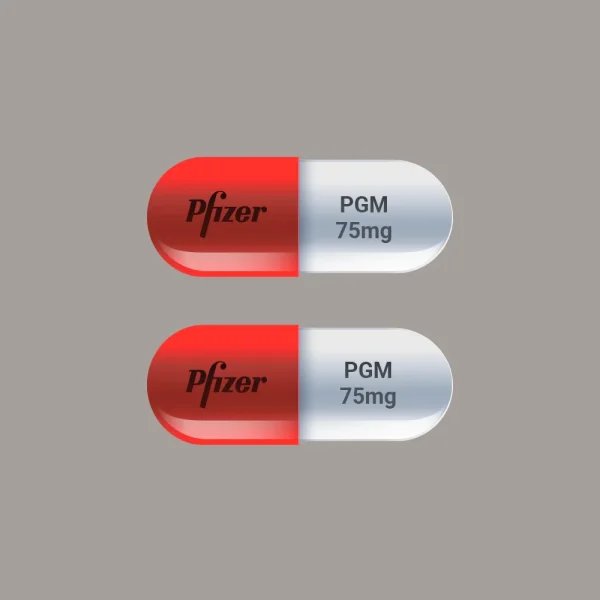
Each capsule contains:
- Active ingredient: Pregabalin
- Strength: 75 mg
- Medicine class: Gabapentinoid
- Prescription status: Prescription Only Medicine (POM)
Pregabalin helps reduce abnormal nerve activity in the brain and spinal cord. It is commonly used to relieve nerve pain, reduce seizure frequency when used with other anti-seizure medicines, and improve symptoms of Generalised Anxiety Disorder.
How Pregabalin Works
Pregabalin binds to the alpha-2-delta (α2δ) subunit of voltage-gated calcium channels on nerve cells.
This action reduces the release of several neurotransmitters involved in:
- Pain signalling
- Seizure activity
- Anxiety pathways
Although pregabalin is structurally similar to gamma-aminobutyric acid (GABA), it does not act directly on GABA receptors.
Medical Uses in the UK
Healthcare professionals may prescribe Pregabalin 75 mg for:
Neuropathic Pain
Pregabalin is used to relieve nerve pain associated with conditions such as:
- Diabetic peripheral neuropathy
- Post-herpetic neuralgia (pain after shingles)
- Central neuropathic pain following spinal cord injury
Generalised Anxiety Disorder (GAD)
Pregabalin may help reduce:
- Excessive and persistent worry
- Restlessness
- Muscle tension
- Sleep problems related to anxiety
Epilepsy
Pregabalin is used as adjunctive (add-on) therapy with other anti-seizure medicines to help control partial-onset seizures in adults.
How to Take Pregabalin 75mg
Always take pregabalin exactly as prescribed by your healthcare professional.
General advice includes:
- Swallow the capsule whole with water.
- Take it with or without food.
- Take doses at the same time each day.
- Do not increase or decrease the dose without medical advice.
- Do not stop taking pregabalin suddenly.
If treatment needs to stop, your healthcare professional will usually recommend reducing the dose gradually over at least one week to reduce the risk of withdrawal symptoms.
Possible Side Effects
Like all medicines, pregabalin can cause side effects, although not everyone experiences them.
Common Side Effects
The most frequently reported side effects include:
- Dizziness
- Sleepiness (drowsiness)
- Blurred vision
- Dry mouth
- Weight gain
- Swelling of the hands, feet, or ankles (peripheral oedema)
- Headache
- Fatigue
- Difficulty concentrating
- Constipation
These effects often improve as the body becomes accustomed to the medicine.
Less Common Side Effects
Some people may experience:
- Double vision
- Tremor
- Memory problems
- Mood changes
- Poor coordination
- Increased appetite
- Confusion
Speak with your healthcare professional if these symptoms become troublesome or persistent.
Serious Side Effects of Pregabalin 75mg
Seek immediate medical attention if you experience:
- Swelling of the face, lips, tongue, or throat (possible allergic reaction)
- Difficulty breathing
- Severe skin reactions
- Thoughts of self-harm or suicide
- Severe confusion
- Loss of consciousness
Dependence and Withdrawal
Pregabalin may cause physical dependence, especially with long-term use.
Withdrawal symptoms can occur if treatment is stopped suddenly and may include:
- Anxiety
- Difficulty sleeping
- Nausea
- Sweating
- Headache
- Diarrhoea
- Flu-like symptoms
To minimise withdrawal symptoms, healthcare professionals usually recommend gradually reducing the dose.
Drug Interactions
Inform your healthcare professional about all medicines and supplements you take.
Pregabalin may interact with:
- Opioid pain medicines
- Benzodiazepines
- Sleeping tablets
- Alcohol
- Other medicines that depress the central nervous system
These combinations may increase the risk of excessive drowsiness, breathing problems, and falls.
Pregnancy and Breastfeeding
If you are pregnant, planning to become pregnant, or breastfeeding, discuss treatment with your healthcare professional.
Pregabalin should only be used during pregnancy when the expected benefits outweigh the potential risks. It passes into breast milk, so breastfeeding decisions should be made with medical advice.
Driving and Operating Machinery
Pregabalin may impair:
- Alertness
- Coordination
- Vision
- Reaction time
Do not drive, cycle, or operate machinery if you feel sleepy, dizzy, or unable to concentrate after taking the medicine.
Safe Storage
- Store according to the instructions on the packaging.
- Keep out of the sight and reach of children.
- Never share your medicine with anyone else.
- Return unused capsules to a pharmacy for safe disposal.
Frequently Asked Questions
What is Pregabalin 75mg used for?
Pregabalin 75mg is prescribed in the UK for neuropathic pain, Generalised Anxiety Disorder, and as add-on treatment for partial-onset seizures in adults.
Can Pregabalin 75mg cause dependence?
Yes. Pregabalin can cause physical dependence and has the potential for misuse. It should only be taken exactly as prescribed.
Can I stop taking Pregabalin suddenly?
No. Stopping suddenly may cause withdrawal symptoms. Your healthcare professional will usually advise reducing the dose gradually.
Can I drink alcohol while taking Pregabalin?
Alcohol can increase dizziness and drowsiness. Combining alcohol with pregabalin may increase the risk of serious side effects, including breathing problems.
Summary
Pregabalin 75mg is a prescription gabapentinoid medicine used in the UK to treat neuropathic pain, Generalised Anxiety Disorder, and partial-onset seizures. When used as prescribed, it can provide effective symptom relief. However, it also carries important risks, including dizziness, drowsiness, weight gain, dependence, withdrawal symptoms, and interactions with alcohol and other medicines that affect the central nervous system. Regular review by a healthcare professional helps ensure that treatment remains safe and effective.
| QUANTITY | 60 TABS, 120 TABS, 180 TABS, 240 TABS, 300 TABS |
|---|
Be the first to review “Pregabalin 75mg”
Related products

Buy Pregabalin Online

Buy Pregabalin Online

Buy Pregabalin Online

Buy Pregabalin Online

Buy Pregabalin Online

Buy Pregabalin Online

Buy Pregabalin Online

Buy Pregabalin Online
Reviews
There are no reviews yet.